On the second morning of Web Summit, there was no Web Summit.
Storm Charles had reached Portugal, and on the government’s direction the organisers cancelled the entire Wednesday programme because of the risk of tidal flooding, transport disruption, and high winds.
For our team on the ground, it meant meetings moved online and to the hotel lobby, trying to make the most of their time in Lisbon. It was a visible reminder of something payments people know too well: the systems you depend on are only as reliable as the parts you don’t control.
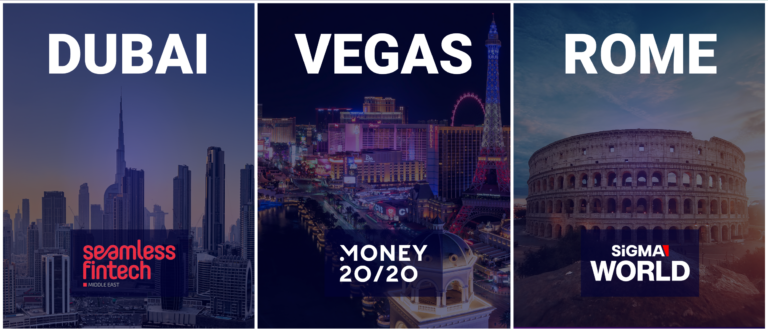
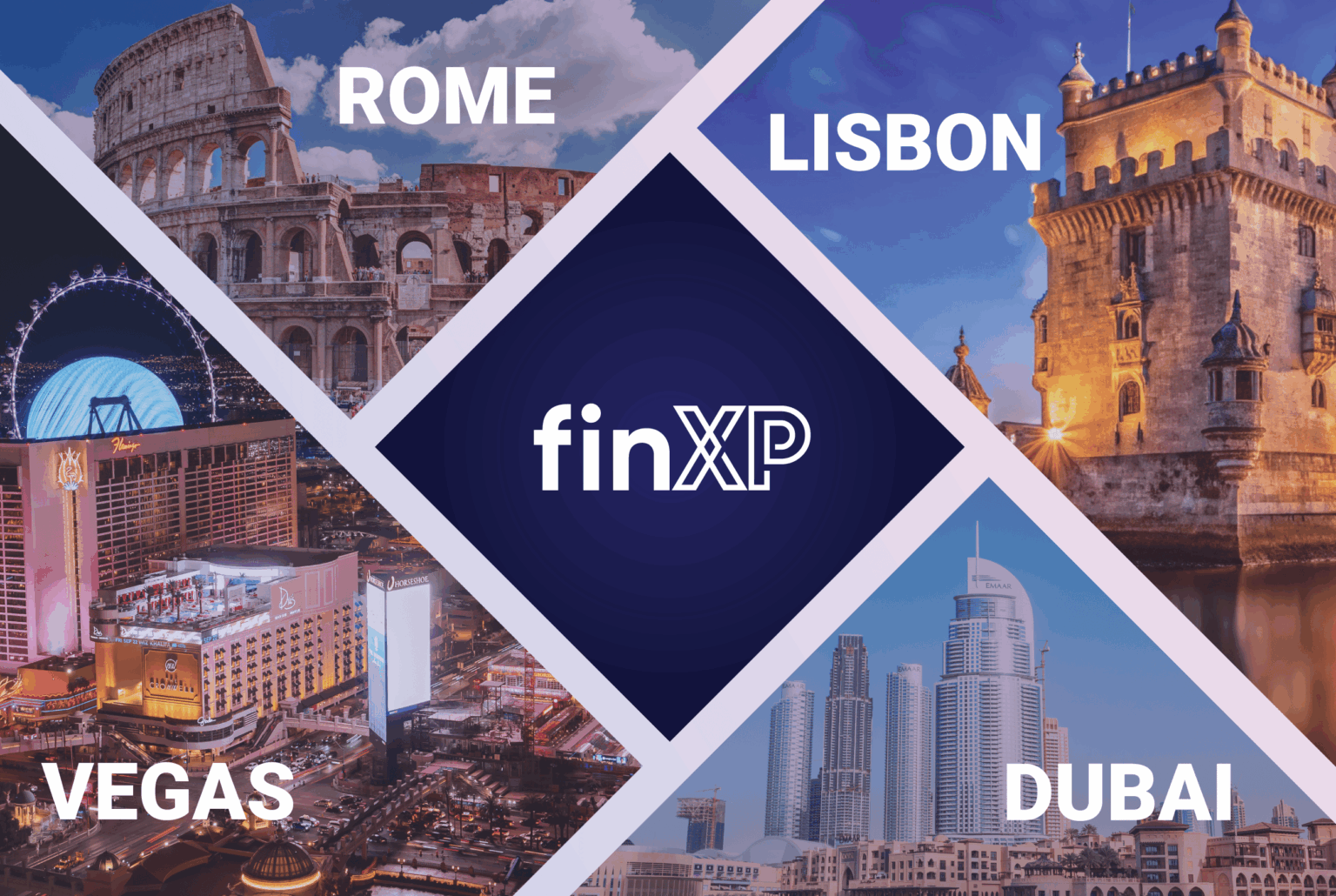
In the second half of this year, FinXP took part in four major industry events: Seamless Middle East in Dubai, Money20/20 USA in Las Vegas, SiGMA World in Rome, and Web Summit in Lisbon.
Although AI and stablecoins dominated the stages, the conversations at our stand were more practical. Together they revolved around one important lesson: payments innovation is only as useful as the foundations it is built on.
Dubai: going global still means getting the local details right
At Seamless Middle East, the stage talk was about cross-border commerce and embedded finance. The questions at our stand were more specific.
Many companies have an ambition to do business globally, but every new market comes with its own currency, payment habits, and regulatory expectations. European customers expect to pay by SEPA Instant or SEPA direct debit, and European suppliers expect to be paid the same way. A business trading in Europe without these payment capabilities is operating at a disadvantage.
That’s the gap FinXP fills: Euro IBAN accounts with SEPA payments, international payouts, and cards.
For businesses entering the European market: before choosing a payments partner, its important to ask how it connects to SEPA rails, which payment types it supports, and what happens when a payment gets declined. The answers will tell you more than the feature list.
Las Vegas: when software pays, someone still has to answer for it
Agentic AI dominated Money20/20 USA. The idea is simple: software agents that don’t just recommend a purchase, but make it, on someone’s behalf.
The harder questions moved from the stage to the show floor: Should agents have their own card, or should they be authorised to use a human’s card? And how do you spot fraud when machines initiate more payments than people do? From a compliance perspective, what does ‘Know-your-agent’ involve?
One plausible view is that agentic payments need existing principles applied rigorously, not abandoned. Every payment should trace back to a clear mandate from an identifiable customer, within limits that customer has set. Responsibility should sit with the regulated firms in the chain, not with the software.
Card issuing already offers a practical model. A virtual card issued for a defined purpose, with spending limits set in advance, lets a business delegate spending without handing over control. As a principal Mastercard member, FinXP issues virtual cards that businesses such as media buyers use in exactly this way today.
The more automated payments become, the more accountability matters.
Rome: in regulated markets, payments are a licence to operate
At SiGMA World, much of the conversation centred on the evolving online gambling frameworks, and what tighter enforcement means for operators’ business models.
On the floor, we met businesses across the risk spectrum, from medium to very high, all looking for payment partners. In this industry, choosing the right clients matters as much as winning them. That takes a culture of good governance, strong compliance and onboarding teams, and independent leadership that can decide who to work with, free from outside investor pressure.
For an operator, payments aren’t a back-office function. If deposits fail, players leave; if withdrawals are slow, trust goes with them. When a payment provider changes its risk appetite overnight, the problem lands on the operator’s customers first.
The same pattern affects fintech, digital assets, and other sectors that banks often treat as outside their risk appetite. FinXP’s approach is to assess each business individually, within our regulatory framework, rather than reject it because of its industry.
That doesn’t mean lower standards, but rather that the company takes a business-friendly approach, taking the time to understand how the clients’ business actually works.
Lisbon: know what sits behind your payments
Beyond the storm, Web Summit’s programme focused on AI, resilience, and Europe’s technological independence. For payments, resilience has a practical meaning.
A business client sees a clean checkout or a dashboard. Behind it there may be several banks, processors, and intermediaries, any of which can change terms, withdraw support, or go offline. Most businesses only find this out when something breaks.
FinXP is an Electronic Money Institution licensed by the Malta Financial Services Authority, with direct access to SEPA through the Bank of Lithuania’s CENTROlink system. For SEPA payments, that means we do not rely on third-party commercial banks, giving our clients added peace of mind.
However, no provider controls everything; we rely on partners for certain international payouts. What matters is that clients understand which parts of their payment chain are direct, which depend on partners, and what happens if one of them changes.
Conclusion: One lesson from four cities
Innovation, regulation, and infrastructure are not separate conversations. A new payment method is of little use if businesses can’t access it, regulators can’t trust it, or the systems behind it can’t deliver every day.
That’s why the most valuable payment partner is rarely the one with the boldest roadmap. It’s the one that understands how your business works and can move your money reliably and on time.
If you’re expanding into Europe or reviewing the dependencies behind your payments, speak with our team. We’ll tell you plainly whether we’re the right fit.